 EN
EN

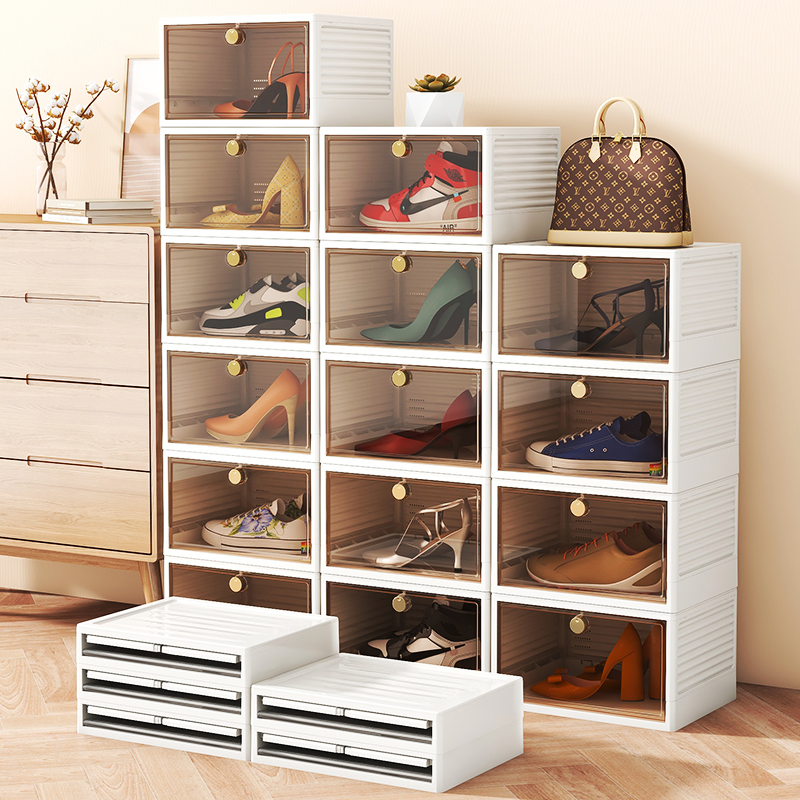
What Makes a Plastic Shoe Cabinet Foldable?
Defining the foldable shoe cabinet design
Plastic shoe cabinets that fold up are becoming really popular these days because they mix modular design with joints that have been put through their paces. These cabinets can be partially or fully collapsed when not needed. What makes them different from regular storage solutions is how they work. The panels lock together but can slide apart or come off completely. The pivot points on these cabinets have actually gone through 15,000 cycles of testing according to those ASTM D4169 standards everyone talks about. And don't forget the hinges - they're reinforced with something called nylon-infused polypropylene which sounds complicated but basically means they won't break easily. A recent survey by the International Home Organization found out something interesting too. About 78 percent of new designs coming out right now use this snap-fit assembly method. That means no screwdrivers or wrenches required, yet the cabinets still hold up after being folded and unfolded many times over.
How folding mechanisms enable compact storage
These cabinets achieve up to 75% space reduction through advanced folding systems:
| Mechanism | Storage Reduction | Avg. Setup Time |
|---|---|---|
| Accordion folding | 70% | 12 seconds |
| Panel stacking | 65% | 18 seconds |
| Telescopic shelves | 80% | 25 seconds |
Double-hinged panels with silicone bumpers prevent warping during compression, enabling urban dwellers to store seasonal footwear in just 0.3m³—down from 1.2m³ required by traditional cabinets.
Rigid vs. collapsible structures: Key differences in functionality
Collapsible storage solutions focus on spreading weight around dynamically instead of just holding static loads. Rigid polyethylene cabinets can typically handle about 50kg spread evenly across their surfaces. The foldable alternatives work differently though. They distribute stress through multiple points usually between 4 to 6 anchors compared to the 8 to 12 points in fixed models. Their walls are also thinner at 1.5 to 2mm thickness versus the standard 3 to 5mm in rigid ones, and they come equipped with locking casters so people can move them around easily. According to a recent material stress analysis from 2024, these collapsible units maintain roughly 85% of what rigid models offer in terms of durability if folded only three times a week or less. That makes them pretty good options for folks who need to store different types of shoes seasonally without breaking the bank on multiple storage solutions.
Plastic Materials and Durability in Foldable Shoe Cabinets

Common Plastics Used: PP, PE, and PVC Compared
The main plastics going into foldable shoe cabinets these days are polypropylene (PP), polyethylene (PE), and polyvinyl chloride (PVC). Most manufacturers go with PP for hinges and joints because it doesn't break down easily after repeated folding. According to some industry research from last year, PP parts can handle around 12 thousand folds before showing any cracks. Then there's PE which is stiffer stuff, so companies often use it to reinforce cabinet frames where extra strength matters. And let's not forget about PVC either. This material packs quite a punch when it comes to resisting scratches, which makes sense why stores in busy areas tend to stock cabinets made with this stuff. The higher density just holds up better against daily wear and tear.
| Material | Flexibility | Durability | Best Use Case |
|---|---|---|---|
| PP | High | Moderate | Folding joints, hinges |
| PE | Medium | High | Frame reinforcement |
| PVC | Low | High | Surface panels |
How Material Choice Affects Folding Performance and Lifespan
How flexible or rigid materials are makes a real difference in how they perform. Polypropylene (PP) can bend right back on itself for those tight 180 degree folds, but won't hold much weight beyond about 15 kilograms per shelf. Polyethylene (PE) isn't as bendy, giving around 120 degrees of flexibility, yet manages to carry twice that weight at 25 kg per shelf. Then there's PVC which just doesn't want to bend at all, making it pretty useless for folding applications even though it can technically support 35 kg per shelf. When manufacturers mix PP and PE together in their construction, they see roughly a 40% reduction in hinge wear compared to using pure PP alone. This blend approach actually lasts longer in the field before needing replacement.
Balancing Lightweight Design With Long-Term Durability
Getting the right thickness makes these things much easier to carry around while still keeping them stable enough for regular use. Take those 2.5 mm PP sheets for instance they weigh about 30% less than the standard 3 mm PE alternatives, and manufacturers have started adding ribbed textures to give extra strength where it matters most. When we look at stress test results, the cross braced PE frames hold up pretty well maintaining around 92% of their original stability even after sitting through five full years of normal wear and tear. That's way better than the PP only versions which somehow manage to keep only about two thirds of their initial strength over time. These days designers are putting in reinforced corners and those handy little anti sag bars too, fixing some of the problems people used to complain about with lighter foldable models from back in the day.
Space-Saving Benefits for Urban Living Environments
Growing Demand for Compact Shoe Storage in Small Homes
With 63% of urban housing units globally measuring under 90m² (Statista 2024), space-efficient storage has become essential. The average apartment dweller owns 12–15 pairs of shoes but dedicates only 0.8m² to footwear organization—driving demand for vertical, collapsible solutions that maximize limited floor space.
Case Study: Foldable Shoe Cabinets in Tokyo’s Micro-Apartments (Under 0.5m²)
A 2023 urban living study found Tokyo residents using retractable shoe cabinets reduced entryway clutter by 71% in apartments under 19m². These compact 0.5m² units incorporate multi-directional folding panels, wall-mounting systems, and compressed-air hinges that ensure rigidity when expanded.
Modular, Stackable, and Folding Designs Trending in 2024
Furniture industry data shows a 138% year-over-year increase in sales of modular shoe cabinets. Contemporary models integrate nesting bins with folding vertical racks, reducing unused footprint by 83% compared to traditional shelving.
Why Space-Saving Shoe Cabinets Dominate E-Commerce Bestsellers
Top online marketplaces report that 92% of best-selling shoe cabinets include collapsible features. Consumer surveys indicate 78% of buyers prioritize "compact storage" over color or brand. Key advantages include setup and breakdown in under six seconds, folded weights under 4kg, and standardized dimensions compatible with balconies and narrow entryways.
Portability and Real-World Use Cases of Folding Shoe Racks
Assessing Portability as a Core Advantage of Foldable Designs
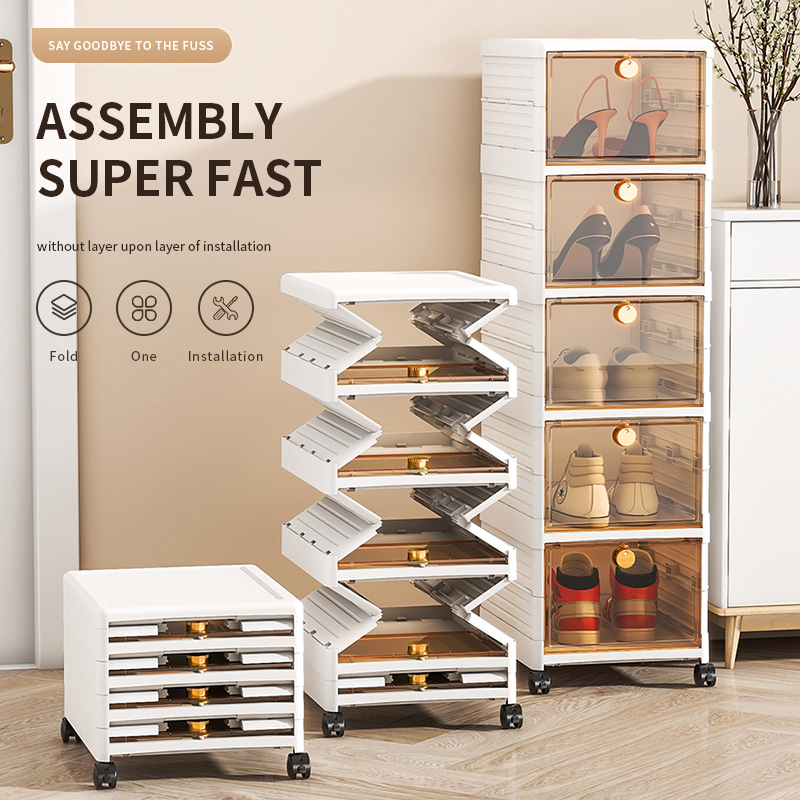
Lightweight polypropylene construction and modular hinges make foldable cabinets highly portable. A 2023 evaluation of space-saving furniture found these units reduce storage volume by 68% compared to fixed alternatives. When flattened to just 10 cm thick, they fit easily into closets or vehicle trunks—ideal for seasonal storage or small-space living.
Ideal Applications: Dorms, Seasonal Homes, and Travel Use
Their adaptability makes them particularly effective in transitional settings:
- Dorm rooms: 92% of college students prefer furniture that fits in standard sedan trunks (2024 Student Housing Report)
- Vacation properties: Portable storage reduces turnover time by 40% compared to built-in units
- Travel: Weighing under 5 lbs when folded, they’re practical for extended stays or events like destination weddings
User Insights: Convenience vs. Stability Trade-Offs
While 78% of users commend foldable cabinets for space efficiency, evaluations reveal trade-offs in longevity and load capacity:
| Factor | Foldable Design | Traditional Cabinet |
|---|---|---|
| Avg. Lifespan | 2–3 years | 5–7 years |
| Max Weight Capacity | 18 kg | 32 kg |
| Assembly Time | <2 minutes | 15–30 minutes |
Users recommend reserving collapsible models for lightweight, seasonal footwear rather than heavy boots or long-term bulk storage.
Innovations Shaping the Future of Foldable Shoe Storage
From Static to Dynamic: The Evolution of Shoe Cabinet Types
We're seeing a big move away from those old fixed storage solutions toward smart foldable designs that really emphasize adaptability in modern living spaces. Current models incorporate things like extendable rails and magnets that hold everything together firmly when expanded but let the whole unit shrink down to take up about one fifth of the space regular cabinets would need. Looking at what's happening in city apartments these days makes sense of this trend too. Recent surveys indicate around two thirds of people renting homes in urban areas want their furniture to work in different configurations depending on how they arrange their rooms week to week.
Smart Folding Mechanisms in Modern Plastic Shoe Cabinets
What was once just simple storage is becoming something much smarter in modern homes. Top brands are adding all sorts of smart tech to their designs these days. We see things like mobile apps that remember how high someone likes their shelves, tiny sensors that kick on fans when moisture builds up, and door hinges built to last through thousands of open-close cycles without breaking down. Some companies have even developed special plastic mixtures that keep moving smoothly whether it's freezing cold or sweltering hot outside. And there's another neat trick too – certain models come with built-in UV light boxes inside the cabinets themselves, which helps kill germs in small apartments where space is at a premium. All these improvements mean what used to be ordinary shoe storage units are now playing a real role in creating healthier, more flexible living arrangements for people who want their homes to adapt with them.
FAQ
What materials are commonly used in foldable shoe cabinets?
Commonly used materials include polypropylene (PP) for hinges, polyethylene (PE) for frame reinforcement, and polyvinyl chloride (PVC) for surface panels.
How do foldable shoe cabinets save space?
Foldable shoe cabinets use mechanisms such as accordion folding, panel stacking, and telescopic shelves to achieve significant space reduction, making them ideal for compact living spaces.
Are foldable shoe cabinets durable?
Yes, they are designed for durability. PP parts can handle up to 12,000 folds, and when mixed with PE, they experience a 40% reduction in hinge wear compared to PP alone.
What are the advantages of foldable shoe cabinets in small homes?
Foldable shoe cabinets maximize limited floor space, reduce clutter, and are easy to set up, making them highly suitable for urban living environments.
Are foldable shoe cabinets portable?
Yes, lightweight construction and modular hinges make them highly portable, suitable for dorms, seasonal homes, and travel use.