 EN
EN

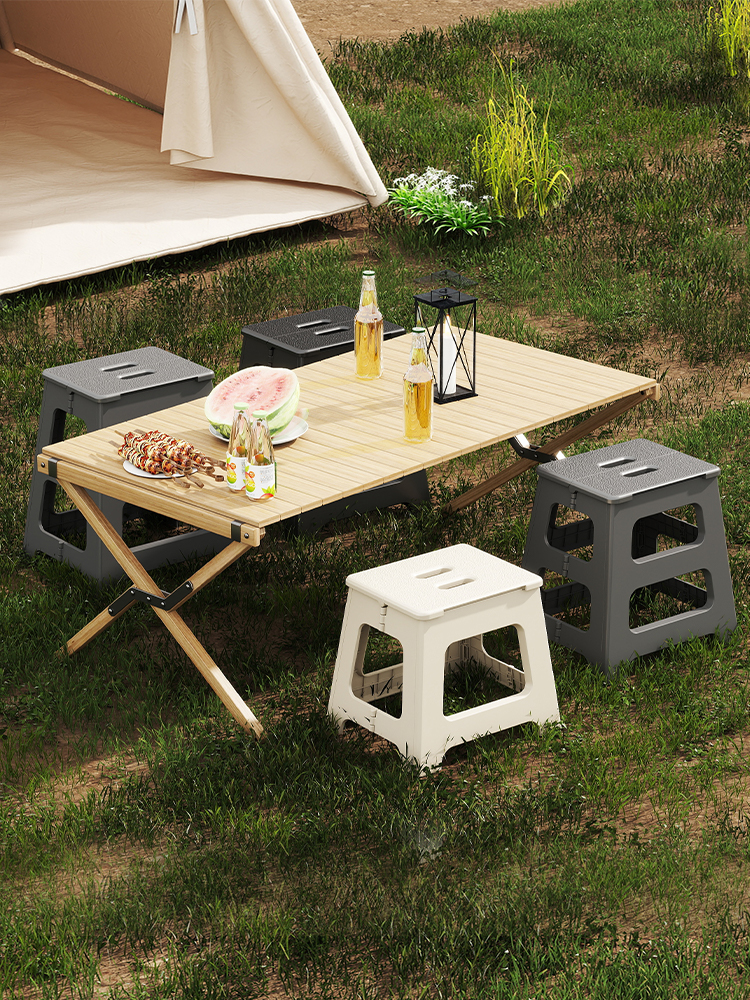
Why Foldable Stools Are Essential for Modern Outdoor Camping
Growing Demand for Portable and Compact Camping Gear
Since 2021, folks interested in outdoor gear have been buying 42% more portable seating options according to data from the Outdoor Industry Association. Campers today really care about keeping things light on their backs, so foldable stools have become quite popular. These little seats collapse down into something much smaller than when fully assembled, taking up around 15% of the space normally needed. That makes them great for backpackers who want to save room in their packs but also works well for those driving to campsites. The whole trend fits right into what many outdoor enthusiasts call the modern mantra of "less is more" when heading into nature adventures.
Matching Lightweight Design with Outdoor Mobility Needs
Modern foldable stools weigh around 1.5 pounds (about 0.7 kg) thanks to new polymer materials and clever hollow frame designs that make them easy to carry anywhere from rough hiking paths to packed music festivals. Recent research into materials back in 2024 showed something interesting too: these tough plastics can actually hold well over 300 pounds (around 136 kg) without adding much weight at all. This basically fixes what used to be a big problem for manufacturers trying to balance how strong something needs to be versus how light it should stay for people who need to move it around constantly.
Positioning the Foldable Stool as a Must-Have Camping Accessory
Three key advantages solidify the foldable stool’s place in every camper’s kit:
- Multisurface adaptability: Non-slip feet provide stability on sand, mud, and uneven terrain
- Instant deployment: No assembly needed—unfolds in under 10 seconds
- Secondary uses: Doubles as a side table, gear organizer, or firewood seat
With 79% of campers citing "versatile seating" as essential to trip enjoyment (2023 Camper Survey), the foldable stool has shifted from luxury to necessity. Its compact form ensures it earns permanent space in camping checklists, blending practicality with the freedom to roam.
Design Benefits: Portability, Compactness, and Ease of Use
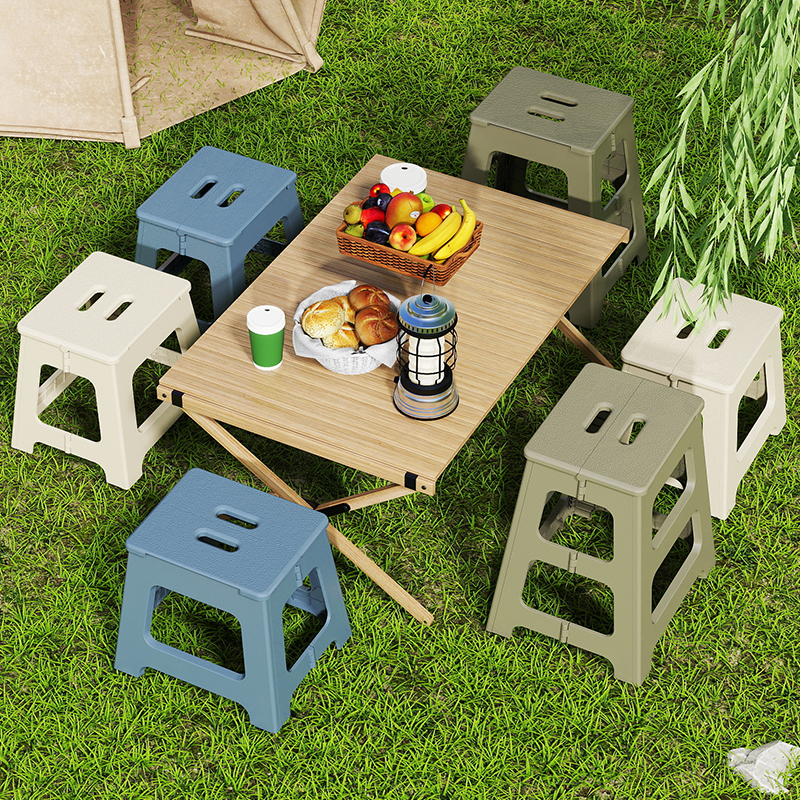
Lightweight Construction for Effortless Transport
Modern foldable stools typically weigh under 2 pounds (0.9 kg), thanks to reinforced polypropylene frames and hollow-leg designs. This balance of lightness and strength makes them ideal for hikes, beach outings, or kayak trips. According to a 2024 Camping Gear Innovation Report, 78% of campers rank weight as the top consideration when selecting portable seating.
Space-Saving Foldable Design for Backpacks and Vehicles
When folded, these stools measure just 3"–4" thick—about the size of a water bottle—enabling storage in tight spaces such as:
- Backpack side pockets
- Car trunk organizers
- Boat compartments
| Design Feature | Folded Dimensions | Unfolded Dimensions |
|---|---|---|
| Foldable Stool | 3" x 12" | 12" x 12" x 18" |
| Traditional Camp Chair | N/A | 15" x 15" x 18" |
Quick Setup and Takedown Without Tools or Assembly
Quality models deploy or collapse in under 10 seconds using intuitive mechanisms like push-button locks, rotational joints, or self-aligning panels. As noted in the 2023 Outdoor Gear Usability Report, tool-free gear reduces setup frustration by 62% during group camping. Top-tier stools maintain stability with weight capacities of 250—300 lbs despite their rapid-deploy design.
Durability and Performance in Challenging Outdoor Environments
High-Strength Plastic Materials Built to Last
Reinforced polypropylene and other advanced polymers resist UV exposure, moisture, and extreme temperatures ranging from -20°F to 120°F—critical for enduring harsh conditions. With 78% of campers prioritizing longevity, manufacturers use injection-molded joints and cross-braced structures to prevent cracking, even after repeated folding or accidental drops.
Stability on Sand, Grass, and Uneven Terrain
Legs angled between 10 and 15 degrees outward combined with broad base plates measuring around 8 to 12 inches across provide solid footing even when terrain gets tricky. The non-slip rubber feet really make a difference too, offering roughly 40 percent better traction on damp grass or sandy hills than regular flat bases would manage. Testing in actual conditions reveals minimal movement - under a third of an inch tilt on slopes at 15 degree angles. This matters quite a bit for folks who need stable seating while hiking near water sources or scrambling over uneven rock formations where balance is critical.
Weight Capacity vs. Lightweight Trade-offs: What Users Should Know
The majority of these designs can handle weights between 250 to 300 pounds thanks to smart reductions in areas where materials aren't so important, like making seat panels a bit thinner but still keeping those parts that actually carry the load nice and strong. Pretty impressive really how something weighing just 2.2 pounds can stand up as well as chairs that tip the scales at around 5 pounds. People who weigh more than 200 pounds will find special versions with triangle shaped supports underneath the seat that spread out pressure much better across the surface area. These reinforced models distribute weight about half again as effectively compared to regular ones, all while staying light enough that nobody notices the difference when sitting down.
Real-World Applications Across Outdoor Activities
Camping and Base Camp Seating Near Tents and Fire Pits
When setting up camp, foldable stools are real lifesavers for base camps where every inch counts and carrying extra weight is a pain. Made from materials that can handle heat up to around 170 degrees Fahrenheit or so, these stools won't melt if placed near a campfire. Plus their small footprint means they don't take up precious room inside tents. According to that recent Outdoor Gear Utilization Report from 2024, something like two thirds of campers actually care about keeping their gear out of the way when it's time to sleep. Makes sense really, nobody wants to kick over a stool in the middle of the night.
Beach and Riverbank Use with Sand-Friendly Stability
Wide legs prevent sinking in soft sand, and UV-stabilized, saltwater-resistant plastics ensure long life in coastal environments. Anglers and beachgoers favor sub-3 lb models that fit easily into kayaks, a design validated by 92% user satisfaction in coastal durability trials.
Hiking, Fishing, Festivals, and Other On-the-Go Scenarios
These stools solve three core mobility challenges:
- Weight-to-capacity ratio: Supports 250+ lbs despite frames under 2.7 lbs
- Weather resistance: Rated IP54 for protection against rain and dust during mountain hikes
- Instant deployment: Sets up in under 8 seconds for spontaneous breaks or fishing spots
A 2023 survey of 1,200 outdoor enthusiasts found that 79% consider foldable stools indispensable for multi-activity adventures requiring adaptable seating.
Innovations Shaping the Future of Foldable Stool Design
Ergonomic Improvements Without Sacrificing Weight
Designers are incorporating contoured seats and lumbar support through graded plastic molding and optimized weight distribution—all while keeping weights below 2.5 lbs. Rib-reinforced seats now reduce pressure points by 27% compared to flat designs (Outdoor Gear Lab 2023), enhancing comfort during long campfire sessions or fishing trips.
Smart Features and Aesthetic Enhancements for B2B Appeal
Manufacturers are adding tool-free height adjustments and NFC tags for inventory tracking, appealing to rental companies and glamping operators. Embedded strain gauges can alert users to overload risks, integrating safety intelligence without compromising foldability. Matte textures and nature-inspired colors help businesses maintain cohesive, brand-aligned outdoor setups.
Sustainable Materials and Eco-Friendly Manufacturing Trends
Looking at recent industry data shows that HDPE plastics made from sugarcane reduce carbon emissions around 35 percent compared to regular plastics on the market today. A lot of companies have started switching completely to recycled polypropylene for their products too, which helps keep about ninety percent of waste out of landfills during manufacturing processes. The outdoor equipment sector is also embracing water based glues along with building things in modules so people can just swap out damaged components rather than throwing away whole items when something breaks down. This approach really supports those circular economy principles we hear so much about these days, making outdoor gear more environmentally friendly without sacrificing quality or durability.
FAQ
What makes foldable stools popular for camping?
Foldable stools are popular because they are lightweight, portable, and take up minimal space, making them ideal for backpackers and anyone looking to save room.
How much weight can foldable stools support?
Modern foldable stools can support between 250 to 300 pounds, thanks to materials like reinforced polypropylene and clever design features that enhance strength without increasing weight.
Are these stools suitable for all terrains?
Yes, foldable stools have non-slip feet and stability features that provide good support on sand, mud, and uneven terrains.
Do foldable stools require assembly?
No assembly is required; they can be unfolded and ready for use in under 10 seconds.
What materials are used in foldable stools?
High-strength plastic materials such as reinforced polypropylene are used, which resist UV exposure, moisture, and maintain durability in extreme temperatures.