 EN
EN


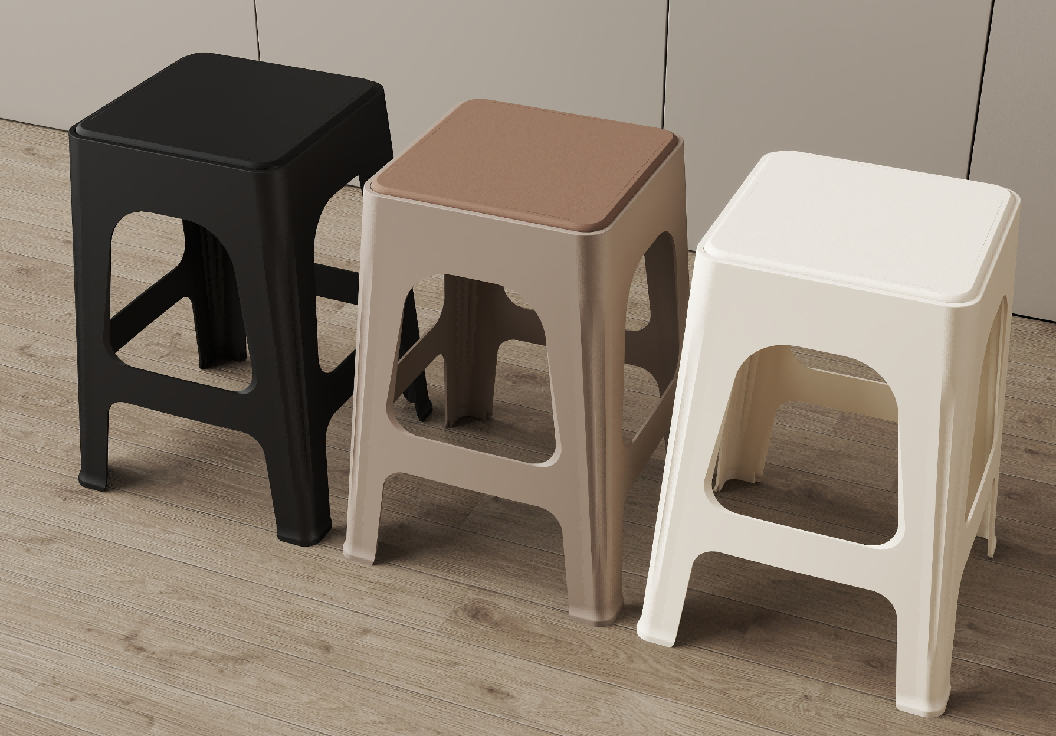
Material Science Behind Durable Plastic Stools
Polypropylene vs. Polycarbonate: Strength, Flexibility, and Real-World Load Performance
Polypropylene (PP) and polycarbonate (PC) dominate plastic stool manufacturing due to complementary performance profiles. PP delivers exceptional chemical resistance and thermal flexibility—critical for outdoor use where temperature swings induce expansion and contraction. Industry testing shows PP withstands up to 30% more cyclic loading before fatigue failure than standard polymers. PC, by contrast, offers superior impact resistance—up to 250% higher than acrylics—and optical clarity, making it ideal for designer stools with transparent components. Leading manufacturers leverage this synergy: using PP in stool legs for shock absorption and PC in load-bearing joints to achieve static load capacities exceeding 500 lbs—proven to resist stress fractures in high-traffic commercial settings.
Reinforced Composites: How Fiberglass and Mineral Fillers Boost Structural Integrity
To overcome limitations of base polymers, advanced composites integrate targeted reinforcements:
- Fiberglass increases tensile strength by 40–60% and significantly reduces deformation under sustained loads
- Mineral fillers, such as calcium carbonate, improve dimensional stability and surface hardness by 35% (per ASTM D785)
- Hybrid formulations—combining glass fibers with impact modifiers—achieve dynamic load ratings up to 800 lbs, surpassing EN 12520 commercial benchmarks
These enhancements directly prevent common failure modes like leg splaying and seat cracking. Independent testing confirms mineral-reinforced stools retain 95% of original rigidity after 10,000 compression cycles—validating their suitability for demanding 24/7 hospitality applications.
Design Excellence in Modern Plastic Stools
Seamless Aesthetics: Monolithic Molding and Ergonomic Silhouettes
Monolithic molding produces plastic stools in a single, joint-free process—eliminating seams that weaken structure and trap debris. This method evenly distributes mechanical stress while supporting hygienic maintenance. Ergonomic contours—curved seats, tapered bases, and lumbar-supportive backrests—are grounded in anthropometric data to minimize fatigue during extended use. A 2023 Furniture Ergonomics Study found body-adapted profiles improved comfort ratings by 37% over flat, unstructured designs. Stackable variants preserve visual cohesion through precision-tapered bases that nest securely—blending structural resilience with refined interior aesthetics.
Color, Texture, and Customization: Achieving Brand-Aligned Visual Identity
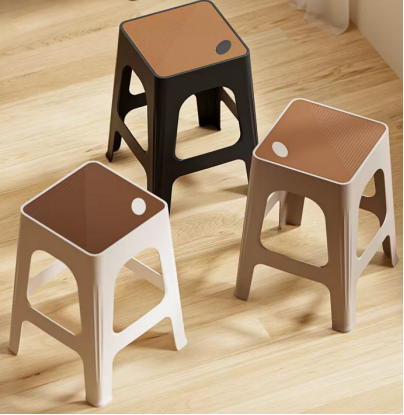
Modern plastic stools support brand integration through pigment-stable color systems and texture-molded surfaces. Matte finishes conceal scratches in high-contact zones; pebbled or ribbed textures enhance grip and mask wear. Over 200 Pantone-matched options allow precise alignment with corporate or hospitality palettes—essential for environments where consistency reinforces identity. Logos embedded during molding ensure permanent, adhesive-free branding. Surface treatment also shapes perception: glossy finishes signal premium positioning, while tactile patterns add depth and functional utility. This level of customization transforms utilitarian seating into intentional design elements that resonate with both users and brand strategy.
Application-Specific Selection: Matching Plastic Stools to Environment and Use Case
Selecting the right plastic stool requires matching material properties and structural features to environmental demands. In humid or industrial spaces—like warehouses or workshops—prioritize models with non-slip feet and reinforced leg bases to maintain stability under dynamic loads. For commercial kitchens and healthcare facilities, seamless monolithic designs with antimicrobial additives simplify sanitation and inhibit bacterial growth. Where spatial efficiency is critical—apartments, cafés, or event venues—stackable or foldable stools deliver compact storage without compromising ASTM-compliant strength. Outdoor installations demand UV-stabilized resins to prevent fading and textured surfaces for wet-condition traction. Always verify weight ratings against ASTM standards: 300+ lbs static capacity is the minimum threshold for reliable high-traffic performance.
Certified Performance: Why ASTM and EN Standards Matter for Commercial Plastic Stools
Third-party certifications—including ASTM F1858 and EN 12520—are essential for commercial-grade plastic stools, converting marketing claims into auditable safety outcomes. ASTM protocols emphasize rigorous static load testing (often exceeding 250 lbs), fatigue resistance, and material durability, while EN standards prioritize ergonomic stability, slip resistance, and long-term structural integrity in dense-use environments. These benchmarks validate real-world performance across restaurants, clinics, classrooms, and offices—where furniture must endure daily abuse without degradation. According to 2023 public-space safety audits, non-compliant furniture contributes to 32% of reported furniture-related injuries. Choosing certified stools mitigates liability, fulfills duty-of-care obligations, and builds occupant confidence—making compliance not just regulatory, but foundational to trust and operational resilience.
FAQ
What are the key differences between Polypropylene and Polycarbonate in plastic stools?
Polypropylene offers exceptional chemical resistance and thermal flexibility, making it suitable for outdoor use, while Polycarbonate provides superior impact resistance and optical clarity, ideal for designer stools.
Why are reinforced composites used in plastic stools?
Reinforced composites, like fiberglass and mineral fillers, enhance tensile strength, dimensional stability, and load-bearing capacity, reducing deformation and preventing common failure modes like leg splaying and seat cracking.
What are the benefits of monolithic molding and ergonomic designs in plastic stools?
Monolithic molding eliminates seams and distributes stress evenly, while ergonomic designs based on anthropometric data reduce fatigue, improving comfort by 37% over standard designs.
How do modern plastic stools achieve brand-aligned visual identity?
By using pigment-stable colors, texture-molded surfaces, and embedded logos, plastic stools can reflect specific brand identities, enhancing aesthetics and functionality.
What factors should be considered when selecting plastic stools for specific environments?
Consider environmental demands like humidity and stability, sanitation needs, storage efficiency, UV resistance, and compliance with ASTM standards to ensure appropriate stool selection.
Why are ASTM and EN standards important for commercial plastic stools?
These standards provide benchmarks for load testing, durability, stability, and safety, ensuring that stools perform effectively in commercial settings and reduce liability risks.