 EN
EN

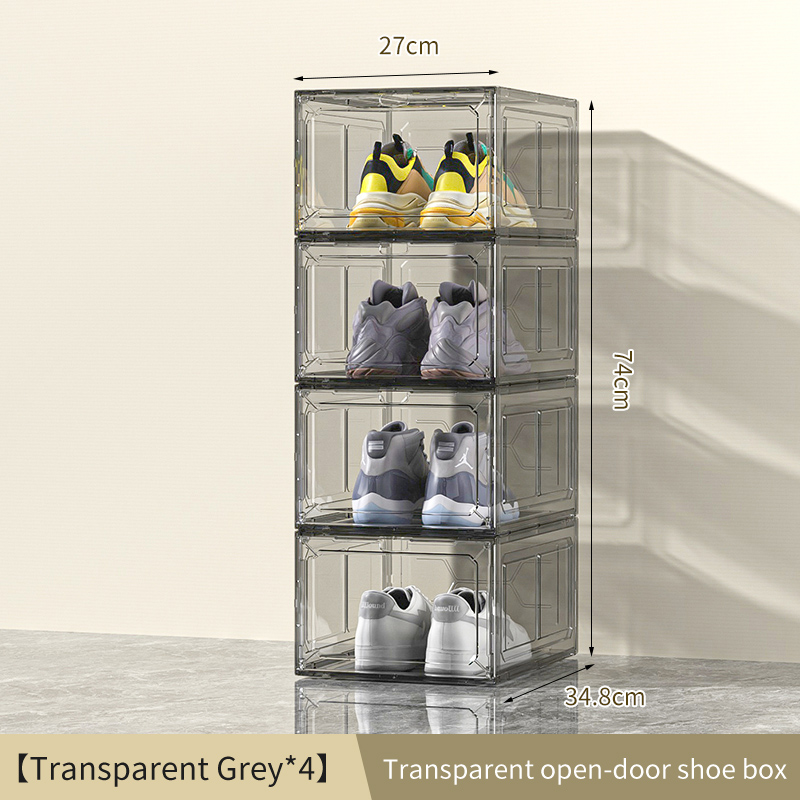
Standard Plastic Shoe Box Dimensions by Shoe Size and Type
Men’s, Women’s, and Children’s Shoe Size-to-Box Dimension Guidelines
Getting the right size plastic shoe box means making sure the inside space matches both foot length and how much room shoes actually take up. Most boxes for men's sizes 6 through 10 have about 14 inches long by 10 wide and 5 high on the inside. The ones for women usually work better if they're around 13x8x5 inches, and kid sizes from 1 to 4 generally need something closer to 10x6x4. Don't forget to leave an extra inch or two in length plus half an inch vertically when considering things like shoelaces, thick insoles, or those fancy padded collars some shoes come with these days. Boxes that are too tight will just squish everything together and make it hard to get shoes in and out without damaging them over time.
| Category | Common Shoe Sizes | Minimum Internal Dimensions (L×W×H) |
|---|---|---|
| Men's Shoes | 6–10 | 14" × 10" × 5" |
| Women's Shoes | 5–9 | 13" × 8" × 5" |
| Children's Shoes | 1–4 | 10" × 6" × 4" |
How Shoe Style Affects Box Geometry: Sneakers, Boots, Heels, and Sandals
The type of shoes we store really affects how much space they take up compared to just regular sizes. Sports shoes often need about an extra inch or two inside storage boxes because of those thick soles and stiff collar areas that stick out. Boots that go above the ankle or all the way to the knee might actually need boxes around 18 inches high if we want them to fit properly without bending. Heels are another story altogether, needing roughly three extra inches vertically to keep the back part secure and stop them from falling over when stored. Sandals with broad straps work best when there's about an inch more room across and half an inch longer than normal dimensions so the straps don't get squished together. And let's not forget about weird shaped shoes like platform styles, western boots, or those fancy designer pieces nobody quite knows what to do with. These definitely call for special custom made containers instead of generic ones to maintain their form and prevent permanent creases or deformations down the road.
| Style | Critical Fit Factor | Recommended Box Adjustment |
|---|---|---|
| Sneakers | Volume/height | +2" height, +1" width |
| Boots | Shaft length | Up to 18" height total |
| Heels | Instep/heel height | +3" height minimum |
| Sandals | Straps/width | +1" width, +0.5" length |
Measuring Your Shoes for Accurate Plastic Shoe Box Sizing
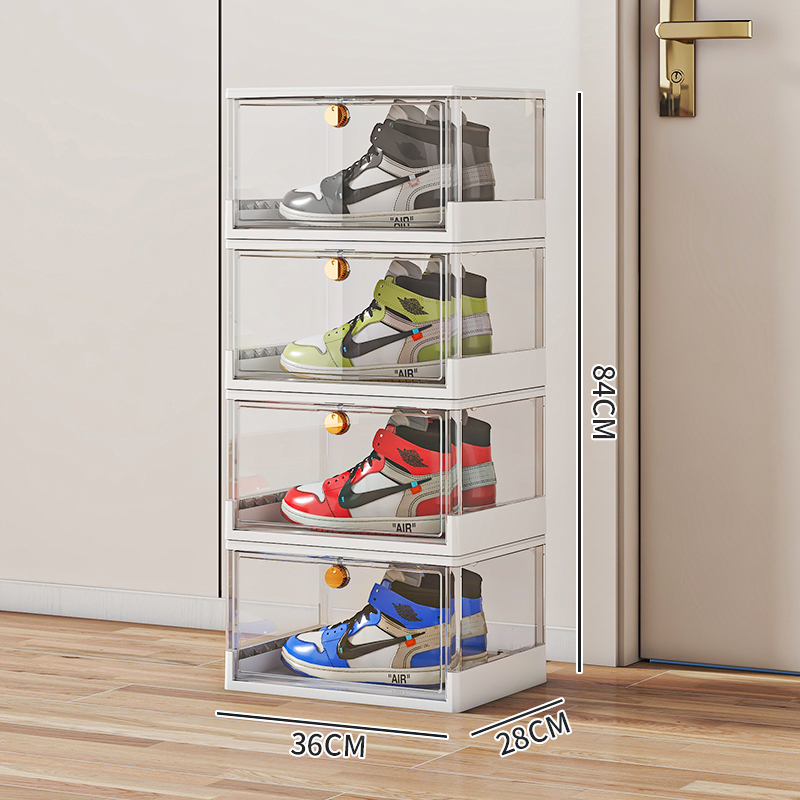
Step-by-Step Measurement Protocol: Length, Width, Height, and Clearance Needs
Measure footwear at their widest and tallest points using a rigid ruler—not flexible tape—to ensure precision. Place shoes on a flat surface, heel flush against a wall or straight edge:
- Length: Measure from the wall to the longest toe point (including heel caps or extended soles).
- Width: Measure across the ball-of-foot area—the widest lateral point—with both shoes placed side-by-side for consistency.
- Height: Record from the sole base to the highest structural element: tongue top, heel counter, or decorative hardware.
Add 0.5–1 inch of clearance per dimension, especially for performance or structured footwear. Prioritize measuring active-wear shoes first—they often define your upper space requirements.
When Standard Plastic Shoe Boxes Don’t Fit: Identifying the Need for Custom Sizing
Standard rectangular boxes fail for specialty footwear when geometry diverges sharply from typical proportions. Red flags include:
- Pointed-toe dress shoes exceeding diagonal internal space
- High-heel boots violating height-to-width stability ratios
- Extra-wide or orthopedic models surpassing conventional width thresholds (e.g., >9" internal width)
If your measured dimensions deviate by more than 15% from common adult box benchmarks (13" × 8" × 6"), or if the shoe profile is non-rectangular, custom sizing becomes essential. Industrial packaging research confirms that mismatched containers account for 62% of preventable shoe deformation during storage, underscoring the value of dimensional fidelity.
How Plastic Material Properties Influence Internal Dimensions and Fit
Wall Thickness, Rigidity, and Usable Volume: Why Not All Plastic Shoe Boxes Are Equal
Choosing the right plastic resin matters a lot for how well something actually works, not just how it looks. When resins cool down after molding, they shrink differently depending on what kind we're talking about. Engineering grade stuff like ABS or polycarbonate typically shrinks around 1% to 1.5%, while those cheaper commodity plastics such as HDPE and polypropylene can shrink anywhere from 2% up to 3%. That means even if two parts look exactly the same size from the outside, one might have significantly less room inside. And wall thickness makes things worse too. Parts with 2mm thick walls end up losing about 4mm in length when compared to ones with just 1mm walls. This shrinking happens along every direction, so designers need to keep these numbers in mind when planning out product spaces.
Molding behavior also matters. High-flow resins fill molds uniformly, delivering consistent internal geometry; low-flow variants risk uneven wall distribution, compromising fit and stack stability. Rigidity further shapes performance:
- Flexible plastics (e.g., polypropylene) compress under load, narrowing effective interior width
- Rigid plastics (e.g., ABS) retain shape but often require thicker walls—trading durability for capacity
These variables mean two boxes labeled “14×10×5” can differ by 15–20% in usable volume, leading to inefficient stacking and higher warehouse density loss—up to 12% in poorly matched systems, per logistics efficiency studies.
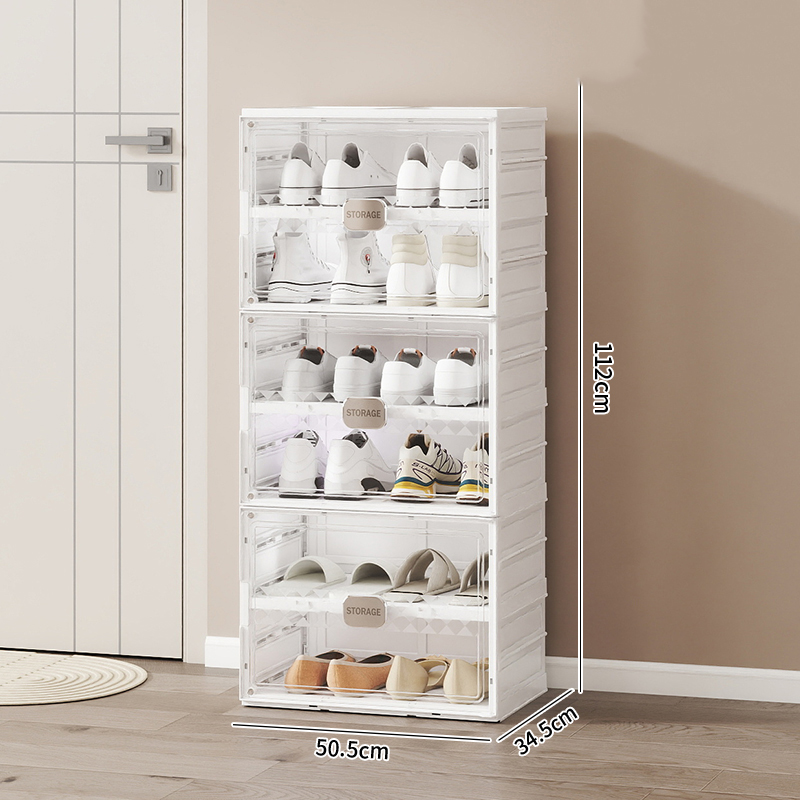
Optimizing Storage Efficiency with Properly Sized Plastic Shoe Boxes
Getting the right size plastic shoe boxes can turn those chaotic storage areas into something actually useful by making better use of all that empty space above our heads. Boxes that fit together properly get rid of those annoying gaps between them which causes so many problems. The Home Organization Journal found last year that around two thirds of people with crowded closets had issues with their boxes falling over because of these gaps. Boxes that match the actual size of shoes tend to snap together nicely, creating stable stacks that take advantage of multiple levels. This simple trick can free up about forty percent of closet space that was just going to waste anyway.
Clear materials really boost efficiency because people can spot what they need right away instead of hunting through stuff hidden inside opaque boxes. Studies suggest this can cut down search time by maybe around 75%, which speeds up those seasonal cleanouts and makes grabbing items during the day much faster. When everything fits the same size, it opens up possibilities for rearranging spaces. Shallow shelves work great for displaying smaller items while deeper storage areas can become organized collections of footwear rather than chaotic piles. Getting the internal dimensions right matters a lot too. Proper height keeps stiletto heels from getting bent out of shape and stops athletic shoes from squishing at the toes, so they stay functional longer. Good organization isn't just about looking neat it actually helps protect valuable items over time.
FAQ Section
What are the standard dimensions for men's plastic shoe boxes?
The standard dimensions for men's plastic shoe boxes, suitable for sizes 6 to 10, are 14 inches long, 10 inches wide, and 5 inches high.
How much extra space is needed in a shoe box for boots?
Boots, especially those that go above the ankle or knee, may require a box up to 18 inches high to accommodate their shaft length without bending.
Why is it important to measure footwear with a rigid ruler?
Using a rigid ruler ensures precision in measuring the widest and tallest points of your footwear, preventing inaccuracies that could result from using flexible tape.
How does plastic shrinking affect shoe box sizing?
Plastic shrinking affects the internal dimensions of shoe boxes, meaning different types of plastics may result in varying usable volumes even if boxes look identical externally.
Can mismatched shoe box sizes cause damage to shoes?
Yes, mismatched shoe box sizes can lead to deformation of shoes during storage, particularly if the fit is too tight or the box shape doesn’t match the shoe geometry.